If you’ve ever tried to rank a post titled “best hikes in Italy,” you know the frustration that follows — dozens of hours researching, writing, and editing, only to watch your article sink somewhere on page 10 of Google. It’s not that your content isn’t good. It’s that you’re competing with massive travel sites, tourism boards, and aggregator blogs that dominate broad search terms.
That’s where most travel bloggers hit their first SEO wall. You pour your experience into a detailed guide, but Google doesn’t recognize your post as unique because it looks just like thousands of others covering the same “best of” list. Broad keywords might sound appealing, but they’re vague, competitive, and don’t connect with the specific readers you want to reach.
Now imagine someone searching for “hidden hikes in Val Gardena.” That person already knows they’re traveling to the Dolomites, wants a less touristy trail, and is ready to plan their route. That’s your real audience — the kind who will read your post from start to finish, save it for their trip, and maybe even subscribe for more guides.
That’s the difference between chasing volume and attracting value.
And it’s exactly why understanding long-tail keywords can change how you plan and write travel content.
In this guide, we’ll unpack how long-tail keywords — those specific, intent-driven phrases like “family-friendly winter hikes near Bolzano” or “budget stays in Cinque Terre for couples” — can help your travel blog reach readers who are genuinely searching for what you offer.
Table of Contents
What are long-tail keywords (in travel terms)
Let’s clear up the jargon. A long-tail keyword simply means a specific, detailed search phrase that shows clear intent — usually three or more words long.
For example:
- “best hikes in Italy” → broad keyword (too general)
- “hidden hikes in Val Gardena” → long-tail keyword (specific, targeted, and powerful)
Think of long-tail keywords as the phrases real travelers type when they already know what they want and where they’re going. These are the people looking for something beyond generic inspiration — they’re ready to plan, book, or explore.
For travel bloggers, that’s gold. Because while everyone’s fighting over high-volume terms like “things to do in Italy” or “top beaches in Europe,” the smarter strategy is to focus on long-tail keywords — those precise searches like “best family hikes near Ortisei in summer” or “romantic weekend ideas Lake Como September.”
They might not bring thousands of visitors overnight, but they’ll bring the right readers — travelers searching for the kind of insider tips only a personal travel blog can offer.
Here’s a tip:
Broad keywords attract browsers.
Long-tail keywords attract planners.
And planners are the ones who click, save, share, and revisit your content — the kind of engagement that actually grows your blog and helps it rank over time.
Why long-tail keywords matter for travel bloggers
Here’s a simple truth: broad keywords might look tempting because of their high search volume, but they’re usually a dead end for small or medium-sized travel blogs. Competing with sites like Lonely Planet or TripAdvisor on “best hikes in Italy” is like trying to shout in a crowded stadium — no one hears you.
Long-tail keywords, on the other hand, let you move the conversation somewhere quieter — where your content actually stands out. These are the specific, intent-driven phrases that bring qualified visitors to your site.
Let’s take a closer look at why they matter:
- They bring the right readers: Someone searching “hidden hikes in Val Gardena” isn’t just browsing — they already know their destination and want real experiences, local insights, and first-hand advice that travel bloggers do best.
- They’re easier to rank for: Long-tail keywords have lower competition, making it easier to rank higher and stay visible. A steady trickle of qualified readers beats zero visibility from broad, overused terms.
- They attract high-intent traffic: These searches come from travelers ready to plan, book, or save itineraries — visitors who engage more and convert better. If you’re unsure how to identify such goals, check out my guide on understanding search intent in travel queries.
- They future-proof your SEO for AI and voice search: More travelers now use AI tools and voice assistants to plan trips, relying on conversational phrases — exactly what long-tail keywords are. Optimizing for them helps your blog appear in AI Overviews and featured snippets.
Long-tail keywords account for roughly 70% of all searches — meaning most travelers already use detailed, conversational queries.
So while “best hikes in Italy” gets lost among hundreds of results, “hidden hikes in Val Gardena” connects your blog with exactly the kind of traveler who will find it valuable — and that’s what Google rewards.
Types of long-tail keywords (with examples)
Not all long-tail keywords are created equal. Some are phrased as questions, others compare destinations, and some zoom in on a particular season or experience.
Each type attracts travelers at different stages of planning — from early research to booking — which is why understanding them helps you reach the right readers faster.
There are six main types that work especially well for travel blogs. The table below shows examples of each and explains what kind of traveler they typically attract.
| Keyword type | Example keyword | Audience intent |
|---|---|---|
| Question-based | what to pack Nepal trek November | Traveler preparing for a specific trip and looking for detailed, practical advice. |
| Destination + qualifier | hidden hikes in Val Gardena | Traveler already decided on a destination, seeking authentic, local or offbeat experiences. |
| Experience or activity-based | sustainable diving tours Malta | Traveler interested in eco-friendly or themed experiences and ready to book. |
| Comparison or problem-solving | Bali vs Phuket digital nomad cost of living | Traveler evaluating options before booking; likely to spend more time reading and comparing. |
| Seasonal or time-specific | best beaches Algarve October | Traveler planning around a specific season or month and looking for up-to-date, weather-relevant tips. |
| Semantic / natural language variations | less crowded hikes in Dolomites | Traveler searching conversationally; may use AI or voice tools for more personalized recommendations. |
Tip: Mix and match different keyword types in your content to capture multiple kinds of intent. For example, combining a destination + qualifier with a seasonal modifier — “hidden winter hikes in Val Gardena for couples” — helps your post rank for both location and timing searches.”
How to find and build long-tail keywords that fit your niche
Now that you know the main types of long-tail keywords and how they reflect traveler intent, it’s time to learn how to actually find them — and how to shape them into SEO-friendly, natural-sounding phrases that match your travel niche.
Finding the right long-tail keywords isn’t about guessing; it’s about listening to what real travelers are searching for. Whether you write about hiking, food, or digital nomad life, these phrases already exist — you just need to know where to look.
Here’s a step-by-step approach you can repeat for any destination or theme:
Step 1: Start broad, then narrow down
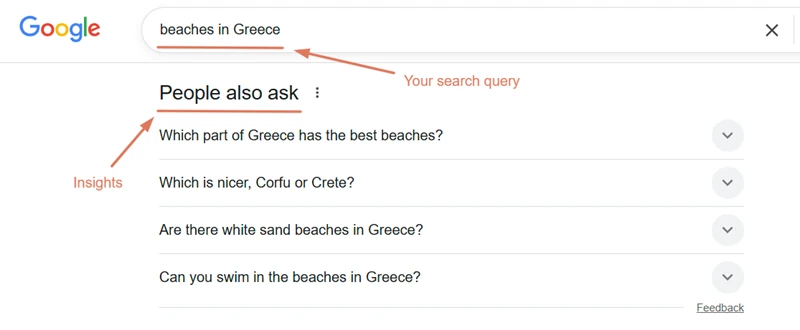
Begin with a seed keyword — something general like “hikes in Italy,” “food in Lisbon,” or “beaches in Greece.”
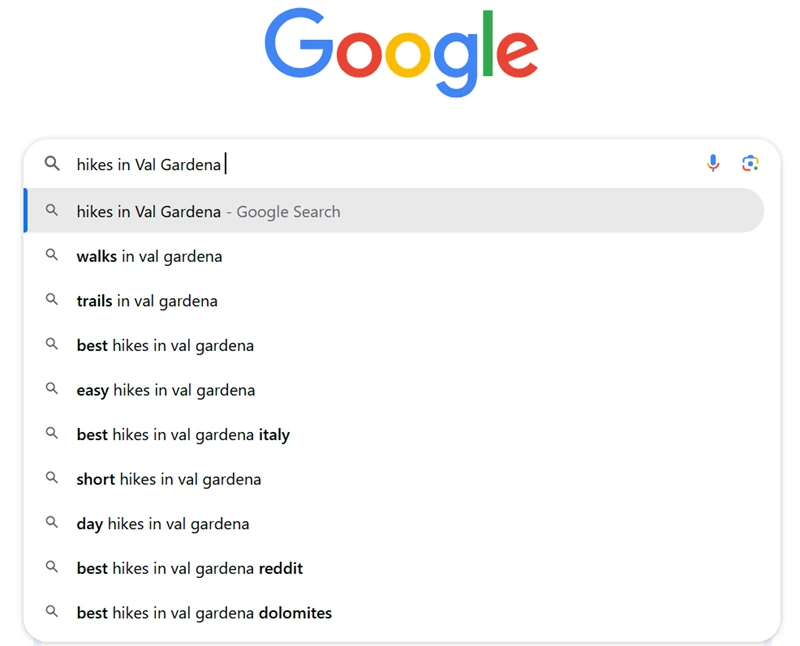
Then, pay attention to the phrases Google suggests as you type. The autocomplete and “People Also Ask” sections are pure keyword gold.
Example: Type “hikes in Val Gardena” and you’ll see suggestions like “easy hikes in Val Gardena,” “day hikes in Val Gardena,” or “best hikes in Val Gardena Dolomites.” Each one can become a separate blog post or subtopic.
Step 2: Use the right keyword tools
Free tools like Google Trends and AnswerThePublic are great starting points. If you want more data, try SEMrush, KeySearch, or TopicRanker to explore search volume, difficulty, and intent.
Tip: Don’t chase high numbers. A keyword with 100 monthly searches but low competition can outperform a 5,000-search phrase you’ll never rank for.
That said, many niche long-tail keywords don’t show any search data at all — especially for hidden destinations or less-covered experiences. They’ll show no data, unknown difficulty, or too little volume for trend graphs — and that’s completely normal. That doesn’t mean no one is searching for them. These hidden gems often perform best for travel blogs, because few others are targeting them.
In those cases, it’s smart to go beyond traditional keyword tools and use AI research platforms like Perplexity, which can surface real traveler questions, trending topics, and long-tail phrases that other SEO tools miss.
You can learn how to do this step-by-step in my post on how to use Perplexity to uncover keyword and topic insights for a travel blog post.
Step 3: Listen to your audience
Your readers are already telling you what they want — in comments, emails, and social media messages.
If someone asks, “Is it easy to reach Alpe di Siusi without a car?” that’s a perfect question-based long-tail keyword for your next post.
You can also browse TripAdvisor forums, Reddit threads, or Facebook travel groups to see the language real travelers use.
Step 4: Analyze competitors and content gaps
Look at other travel blogs covering your niche. Which destination or experience modifiers are they ranking for? These are the words that add depth or specificity — like hidden, budget-friendly, family-friendly, or luxury.
You might notice everyone writing about “best hikes in the Dolomites” but no one mentioning “hidden hikes near Santa Cristina” — that’s your opening.
Competitor research doesn’t mean copying; it means identifying gaps where your experience fits best.
Step 5: Build your own long-tail keyword phrases
Once you’ve gathered ideas, it’s time to structure them into powerful, natural-sounding phrases. Use this formula:
[Destination] + [Activity or Experience] + [Qualifier or Intent]
Examples:
- Val Gardena winter hikes with kids
- Trieste cafés for remote workers
- budget stays near Lake Como for couples
Modifiers are what give long-tail keywords their precision — they turn a generic search into a highly targeted one. You can mix and match them based on your blog’s niche.
Table 2: Common travel keyword modifiers
| Modifier type | Examples | When to use it |
|---|---|---|
| Seasonal / Time-based | in summer, in winter, November, spring, weekend | When content depends on seasonality or travel timing. |
| Budget-based | cheap, affordable, budget-friendly, free | Ideal for budget travel or money-saving guides. |
| Style / Experience-based | luxury, eco-friendly, sustainable, slow travel | When targeting readers by travel style or values. |
| Audience-focused | with kids, for couples, solo travel | Perfect for tailoring posts to a specific traveler type. |
| Location precision | near [city], around [region], in the heart of [destination] | Great for local SEO and destination-specific content. |
| Mood / Discovery-focused | hidden, offbeat, local-favorite, authentic, less crowded | Use when appealing to travelers seeking unique or local experiences. |
| Purpose / Intent-based | weekend getaway, day trip, itinerary, guide, photo spots | Best for posts that fulfill a specific travel goal or format. |
Tip: Combine two or more modifiers to create even more specific long-tail keywords — for example, “affordable hidden restaurants in Florence for couples” or “eco-friendly weekend getaways in Sardinia.”
These combinations make your content stand out for niche audiences and help your posts rank faster for intent-driven searches.
Before you move on:
Don’t worry if your long-tail keywords don’t show search volume or difficulty data — that’s normal.
Niche phrases rarely appear in keyword tools, but you can still validate them by checking whether they surface in Google’s autocomplete, traveler forums, or AI tools like Perplexity.
If real travelers are using those words online, that’s all the confirmation you need.
For a deeper breakdown of keyword discovery techniques, check out my step-by-step post on keyword research for travel content.
How to integrate long-tail keywords for better SEO and AI visibility

Now that you’ve found your long-tail keywords, the next step is to use them naturally throughout your content. This is where many travel bloggers overthink SEO — worrying about “keyword density” or trying to squeeze the exact phrase in ten times. The truth? Google and AI systems are smarter than that.
They don’t just look for an exact keyword match anymore. They understand context — which means your job is to write like a human, not a machine.
Here’s how to integrate long-tail keywords effectively while keeping your writing natural and AI-friendly.
Use them where they matter most
Focus on key visibility spots instead of overusing them in the body text:
| Placement | How to integrate naturally |
|---|---|
| Title tag (H1) | Use the full phrase naturally. Example: “10 Hidden Hikes in Val Gardena for Quiet Mountain Lovers” |
| Meta description | Paraphrase the keyword with intent: “Discover hidden hikes and secret Dolomite trails in Val Gardena — ideal for travelers seeking local experiences.” |
| Headings (H2/H3) | Add variations instead of repeating the same phrase. Example: “Offbeat hiking trails near Santa Cristina” |
| Intro paragraph | Mention the keyword once early on to set context for readers and search engines. |
| Image alt text | Describe what’s shown: “view from a hidden hike in Val Gardena, Dolomites.” |
| URL slug | Keep it short and descriptive — e.g., /hidden-hikes-val-gardena/ |
Vary your phrasing and use semantic terms
Instead of forcing the same phrase, use related or natural language variations. This helps both Google and AI tools understand your topic.
Example:
Main keyword → hidden hikes in Val Gardena
Semantic variations → quiet Dolomite trails, off-the-beaten-path routes in South Tyrol, less crowded hikes near Ortisei
Tip: This variation improves your content’s chances of appearing in AI Overviews and voice search results, which favor conversational language and clear intent.
Optimize for AI-driven search and GEO
As Google and AI-powered tools increasingly summarize search results, your blog’s visibility depends on how well it aligns with Generative Engine Optimization (GEO) — writing that’s context-rich, clear, and entity-based.
To make your travel posts more AI-readable:
- Use specific entities (places, landmarks, seasons, activities) – for example, Val Gardena, Dolomites, Seceda Ridge, summer hiking.
- Answer questions directly in short, clear sentences.
- Add schema markup for location and activity (e.g., TouristDestination, Place, or HikingTrail).
- Keep your paragraphs short and scannable — AI systems prioritize clarity.
Example: “The Seceda Ridge Trail in Val Gardena is one of the most scenic hikes in the Dolomites. It’s best in early summer when the alpine meadows bloom.”
This line uses entities (Seceda Ridge, Val Gardena, Dolomites, summer) that help AI tools accurately summarize your content and match it to user intent.
For a deeper look at how to structure your blog posts so they’re easier for AI and search engines to interpret, check out my guide on how to structure travel content for AI visibility.
Refresh older posts with long-tail keywords
You don’t need to start from scratch. Go back to older posts that target broad terms and refine them with new, more specific phrases.
Example:
- Original: “Hikes in Dolomites”
- Updated: “Hidden Hikes in Val Gardena: Peaceful Trails in the Dolomites”
Then update your headings, image alt text, and intro paragraph accordingly.
It’s one of the fastest ways to breathe new life into existing content and boost traffic without writing something new.
When done right, long-tail keywords act as SEO signposts — guiding both readers and AI systems toward your content.
They don’t just help you rank; they make sure your blog gets surfaced exactly when travelers are looking for what you’ve already experienced.
Bonus tip: map keywords to your travel content calendar

Finding great long-tail keywords for travel blogs is only half the job — the real impact comes when you use them strategically throughout the year. A simple keyword map helps you plan content seasonally, avoid repetition, and make sure your travel guides go live before travelers start searching for them.
Here’s how to turn your long-tail keyword list into a content calendar that actually drives traffic:
Step 1: Start with your main travel themes
List 3–5 core topics you regularly cover — for example, hiking, food & cafés, or eco-friendly travel. These become your content pillars.
Step 2: Group related long-tail keywords under each theme
Use your keyword list and cluster ideas that share a destination or intent. For instance:
| Theme | Long-tail keyword cluster |
|---|---|
| Hiking | hidden hikes in Val Gardena, easy Dolomites trails, family-friendly hikes Ortisei |
| Food | local restaurants in Trieste, affordable seafood Bari, vegan cafés in Florence |
| Sustainable travel | eco lodges Sicily, sustainable tours Malta, low-impact hikes Trentino |
This helps you plan internal links between related articles and build topical authority over time.
Step 3: Match keywords to travel seasons and trends
Publish content ahead of seasonal peaks. For example:
- Summer hiking posts → publish in April or May.
- Winter markets → publish in October.
- City guides → plan around major holidays or events.
Tip: Use Google Trends or Perplexity to spot when interest for specific destinations starts rising. Timing your posts right can make a huge difference in visibility.
Step 4: Keep a living keyword calendar
Use a tool like Notion, Airtable, or Google Sheets to manage your ideas. Add columns for:
- Keyword
- Theme / cluster
- Target season
- Content format (guide, listicle, itinerary, etc.)
- Status (planned, in progress, published)
Having everything in one place helps you maintain consistency and balance — ensuring you’re not publishing five Italy guides in a row while neglecting other countries.
By mapping your long-tail keywords into a clear plan, you’ll stay organized, create more cohesive content, and continuously expand your reach.
It’s a simple system, but it keeps your travel blog growing — one niche keyword at a time.
Conclusion: small niches, big results
You don’t need massive traffic to grow a successful travel blog — you need the right readers.
Next time you plan a post, skip the generic “best things to do” titles and think smaller, deeper, and more specific. Instead of targeting “best hikes in Italy,” go for “hidden hikes in Val Gardena.” It may attract fewer clicks, but those clicks come from travelers genuinely interested in your experience.
Long-tail keywords connect your content with readers who stay longer, engage more, and often return.
That’s the power of being specific — your blog becomes more discoverable, more personal, and more aligned with how people actually search.
Start small: update one post with a long-tail keyword and see how it performs.
Because in travel blogging, the hidden trails — both literal and digital — often lead to the best views.
FAQs about long-tail keywords for travel content
Stick to one main long-tail keyword per post and a few natural variations. For example, if your focus is “hidden hikes in Val Gardena,” you can also include related phrases like “offbeat trails in the Dolomites” or “quiet mountain walks near Ortisei.” Too many keywords can make your writing feel forced and confuse search intent.
Yes, but keep them natural. Instead of using something like hidden-hikes-val-gardena-keyword.jpg, describe what’s in the photo — e.g., “view from a hidden hiking trail in Val Gardena Dolomites.” This improves both accessibility and SEO without keyword stuffing.
Absolutely. Long-tail phrases work great on platforms like Pinterest, where people search conversationally. A pin titled “Hidden hikes in Val Gardena for quiet mountain lovers” can drive consistent referral traffic, especially if you include related phrases in your pin description.
Monitor Google Search Console instead of third-party tools. It shows the exact queries your blog appears for, even low-volume ones. If you start getting impressions or clicks for variations of your keyword (like “secret hikes Val Gardena”), it’s a good sign your content is gaining traction.
Yes — and it’s one of the easiest SEO wins. Find older posts that target broad terms (e.g., “best hikes in Italy”) and narrow them down. Update the title, headings, and meta description to focus on a specific variation like “hidden hikes in Val Gardena.” This can quickly boost your visibility for more relevant searches.