AI-driven search is rewriting the rules for travel bloggers.
It’s no longer enough to publish a beautiful guide. To stay visible, your content needs to be structured so AI systems can interpret, summarize, and surface it in answer boxes or generative summaries. That’s what “AI visibility” means in 2025.
So, what does this mean for your travel blog? It means writing with both humans and algorithms in mind — with question-style headings, itinerary tables, map embeds, schema markup, entity-rich modules, and internal linking. Using Trieste as our working example, we’ll walk step by step through assembling a modular, crawlable, and “snippable” travel article.
Here’s what you’ll learn:
- How to break a destination into modular content blocks
- How to use tables, maps, and schema to improve AI interpretability
- How to link locally and build connections across your content
- How to test your draft and refine it based on AI’s “view” (AI-ready prompt!)
Table of Contents
Why AI visibility is shifting the rules for travel bloggers
Search engines no longer work the way they used to. Instead of showing ten blue links, they’re increasingly answering travel questions directly through AI-generated summaries. Whether a reader asks “Where to hike near Trieste?” or “What to see in Trieste?” tools like Google’s AI Overviews, Bing Copilot, and Perplexity AI pull their answers from existing web content.
That means your post isn’t competing only for clicks anymore — it’s competing to be referenced. And AI systems reference content they can easily interpret: text that’s clearly structured, entity-rich, and factually consistent.
For travel bloggers, this changes everything. A beautiful narrative or a personal story still matters, but algorithms now reward clarity as much as creativity. Posts that combine grounded details (like distances, neighborhoods, and local attractions) with logical flow (planning → activities → tips) are easier for AI to summarize, and therefore more likely to appear in generated responses.
AI visibility isn’t about chasing a new trend; it’s about future-proofing your content. When you write with structure, you help algorithms understand how each piece of your story connects: the locations you mention, the order of activities, the travel logistics. The clearer that picture, the higher your chances of being surfaced in AI summaries, featured snippets, or “People Also Ask” boxes.
In short, your travel blog is no longer read only by humans. It’s interpreted by algorithms. Understanding how they parse structure, entities, and relationships is now part of writing itself. And that’s where AI-first SEO comes in.
From traditional SEO to AI-first SEO
Traditional SEO focused on keywords, backlinks, and ranking positions. AI-first SEO expands that logic to include how easily a system like ChatGPT or Google’s Gemini can understand and reuse your content. It’s less about “ranking high” and more about being interpretable.
To adapt, travel bloggers need to think in terms of three connected layers:
| Framework | What it means | Example in a travel post |
|---|---|---|
| AEO (Answer Engine Optimization) | Make content snippet-ready for fast answers | Use question-style headings like “When is the best time to visit Trieste?” with a short answer |
| GEO (Generative Engine Optimization) | Structure content so AI can create accurate summaries | Use clear entities (Trieste, Miramare Castle), tables, and schema markup |
| AIO (AI Optimization) | Write clearly and logically so AI can interpret and cite it | Keep paragraphs short, transitions smooth, and data factual |
Together, these layers help you build posts that are readable, scannable, and machine-interpretable.
Travel guide vs AI-structured travel post
| Aspect | Traditional travel guide | AI-structured travel post |
|---|---|---|
| Focus | Storytelling and inspiration | Structure, clarity, and discoverability |
| Formatting | Long paragraphs, few subheadings | Question-based sections, bullet points, tables |
| Visuals | Photos without context | Images with descriptive alt text and captions |
| Links | Occasional references | Consistent internal and local outbound links |
| Outcome | Readable by humans only | Readable by humans and reusable by AI systems |
This new mindset is what turns your writing from a static travel story into a dynamic, data-friendly content model — one that algorithms can interpret and elevate. Next, we’ll take that concept and make it practical by breaking down a real example: Exploring Trieste (Italy), and how to structure it for both readers and AI.
Choosing and breaking down your example: Trieste as a structural case study
Before applying AI-first SEO principles, it helps to have a concrete example to work with. And using a real destination lets you translate abstract SEO ideas into something tangible.
For this post, I’m using Trieste, a coastal city in northeastern Italy. It’s compact, diverse, and rich in recognizable entities — perfect for demonstrating how to structure travel content for AI visibility. In one short destination, you have everything:
- a city center filled with landmarks,
- a seaside promenade (Barcola),
- a historical attraction (Miramare Castle), and
- an outdoor activity area (the Strada Napoleonica hiking and climbing trail).
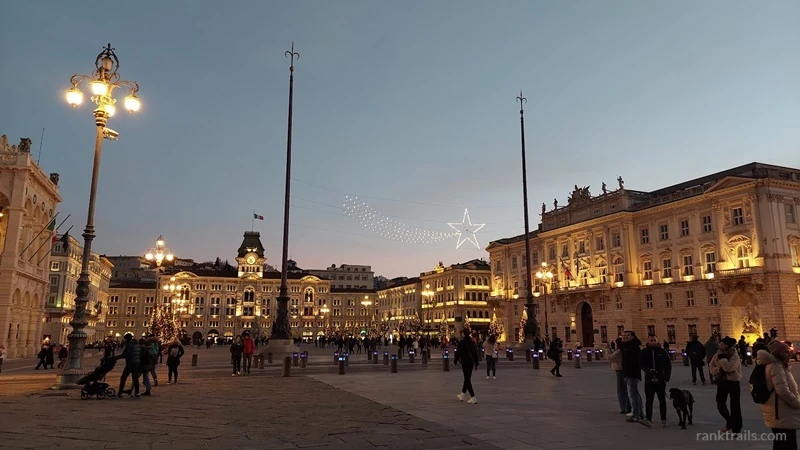
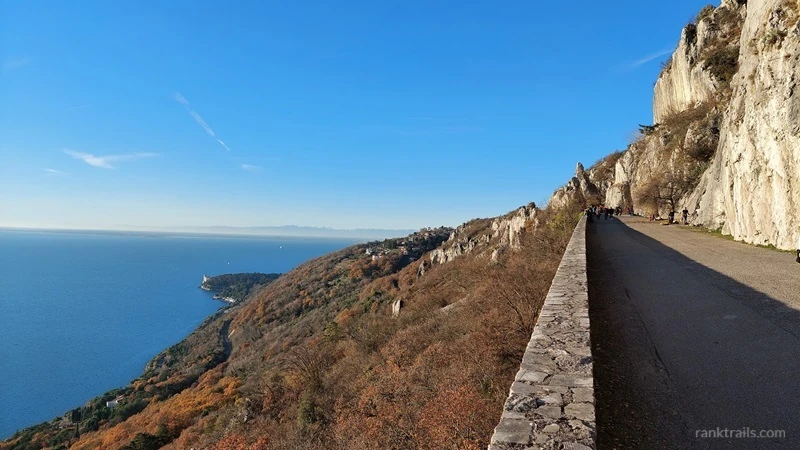
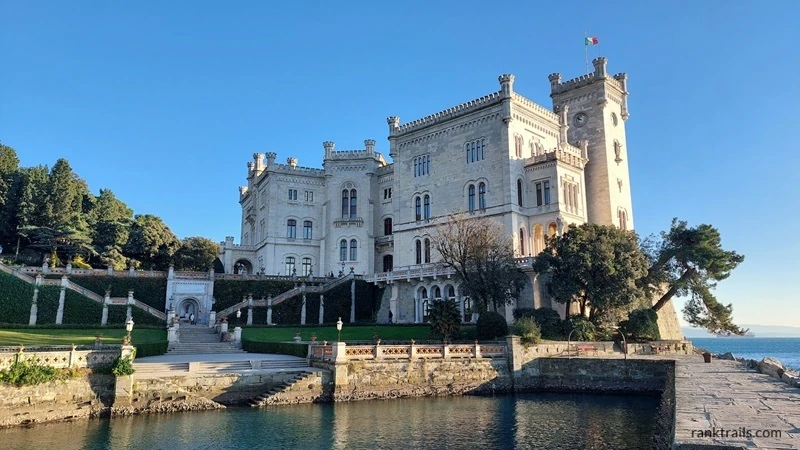
These distinct components make Trieste ideal for showing how to break a destination into modular content blocks — sections that stand on their own but connect logically. Each module represents an entity AI can recognize and categorize. The clearer the separation between these blocks, the easier it is for algorithms to understand your post’s structure and relationships.
Quick definition — what entities and relationships mean in SEO
In SEO, an entity means a unique, identifiable “thing” such as a city, landmark, event, or person — something that exists independently and can be recognized by search engines.
The relationship between entities shows how they connect (for example: Trieste → is located in → Friuli-Venezia Giulia, or Miramare Castle → is a tourist attraction in → Trieste).
These relationships help AI understand context — who or what belongs where — improving how your travel post appears in summaries and search snippets.
Here’s a simple way to think about it:
| Module / Entity | Type | Example heading | Structural purpose |
|---|---|---|---|
| Trieste city center | Urban / cultural | “What to see in central Trieste” | Defines your base location; helps AI identify context |
| Barcola promenade | Coastal / leisure | “Where locals swim and stroll in Trieste” | Adds spatial contrast and connects to outdoor activities |
| Miramare Castle | Historical / attraction | “Why Miramare Castle is Trieste’s must-see landmark” | Introduces a key entity and links to official sites |
| Strada Napoleonica | Outdoor / hiking | “How to hike or climb the Strada Napoleonica” | Demonstrates itinerary, route structure, and safety tips |
Each block can become its own mini-section, complete with headings, short paragraphs, and clear internal links. This modular approach lets you:
- Reuse content across multiple posts (for example, a “Castles of Italy” cluster) without copy-pasting, because self-plagiarism is still duplication in Google’s eyes.
Reuse means repurposing: adapting or reframing parts of your content to fit a new context, audience, or intent.
- Update each module independently, improving freshness.
- Give AI clearer boundaries and relationships between places, activities, and themes.
The goal isn’t to make your travel writing mechanical but it’s to make it organized enough for algorithms to read it correctly.
Structural elements for AI-friendly travel content (with Trieste examples)
Once you’ve defined your main modules — like Trieste city center, Barcola promenade, Miramare Castle, and the Strada Napoleonica trail — the next step is to apply structural elements like question-style headings, itinerary tables, and map embeds that strengthen both user experience and AI comprehension.
1. Use question-style headings with direct answers
AI systems look for content that mirrors how users ask questions. So, structuring your subheadings as real queries (“What is the Strada Napoleonica?” or “Why is Miramare castle famous?”) helps your post align with search intent and prepares it for snippet inclusion. Under each heading, start with a direct answer—a one or two-sentence summary that fully answers the question before you elaborate. This short, factual statement gives AI a clear hook to interpret and quote.
Example:
What is the Strada Napoleonica?
The Strada Napoleonica is a panoramic hiking trail above Trieste connecting the Obelisco viewpoint in Opicina with the coastal area near Miramare Castle, offering sea views and easy access to local climbing routes.
That short description gives AI the essential data (type, location, connection, purpose) before you expand with your personal tips or historical background.
Snippet-readiness checklist:
- Could this answer stand alone if pulled into a snippet or AI summary?
- Does it include key details — e.g., time, place, and entity names (Trieste, Miramare, trail type)?
2. Add itinerary tables and step sequences
Tables are one of the clearest formats for both readers and crawlers. They introduce structured data that AI can easily interpret. Instead of describing an itinerary in long paragraphs, use a simple table or step-by-step breakdown that clearly shows the order of activities, times, and locations.
For travel content, the structure you choose depends on your topic:
- One-day itinerary: ideal for destination overviews (e.g., “One Day in Trieste”).
- Day-by-day breakdown: works best for multi-day trips where each day includes a short summary, activities, and local highlights.
- Thematic itineraries: perfect when grouping experiences (e.g., “Trieste for architecture lovers” or “Outdoor weekend around the Carso”).
Example for a one-day itinerary in Trieste:
| Time | Activity | Location | Notes / Tips |
|---|---|---|---|
| Morning | Coffee and photos at Piazza Unità d’Italia | City center | Go early before it fills up |
| Midday | Bus to Miramare Castle | Trieste coast | Visit the park and museum |
| Afternoon (optional) | Hike the Strada Napoleonica | Opicina area | Panoramic views and climbing spots |
| Evening | Aperitivo along Barcola promenade | Seafront | Ideal for sunset photos |
Each row becomes a mini data point that AI can parse, especially when you include clear references to time, place, and activity type.
If you want to reinforce visibility even more, wrap the itinerary section with a HowTo or Step schema, using each line as an action or stage. For example, “Step 1: Explore the city center,” “Step 2: Visit Miramare Castle,” and so on.
This structure helps AI recognize the sequence of your recommendations and supports features like “People also ask” or AI-generated trip summaries.
3. Embed maps and use schema for places
Visual elements like maps add user value but also help AI understand spatial relationships, if you describe them correctly. Crawlers can’t “see” a map, but they can read your surrounding text and schema data.
When embedding a Google Map (or another interactive map), include a short descriptive caption.
For instance: “The map below shows the route connecting Trieste’s main landmarks: Piazza Unità d’Italia in the city center, Barcola promenade, Miramare Castle, and the Strada Napoleonica trailhead in Opicina.”
If your CMS platform (e.g., WordPress or Wix) allows it, add Place or TouristAttraction schema for each key location. These schema types help search engines identify what the map represents and how your destinations connect — for example, that Miramare Castle (a tourist attraction) is located in Trieste (a city in Italy). This relationship helps AI understand geographic context and strengthens how your post appears in AI-generated travel summaries.
The result? AI systems can connect your text, your map, and the named entities. This will improve your chance of appearing in context-rich AI summaries or destination snippets.
4. Link to local, authoritative sources
Outbound links to official and credible sites signal reliability to both readers and algorithms. They help AI systems verify your facts and connect your post to recognized, trustworthy data sources.
For every module you create — for example, whether it’s about the city center, Miramare Castle, or the Strada Napoleonica — include at least one or two external links to local or official sources. These might include:
- The Trieste Tourism Board website (discover-trieste.it) for general travel details and current events.
- The Miramare Castle official museum page (museiitaliani.it) for ticket prices and opening hours.
- Regional hiking or climbing associations for up-to-date route maps and safety information.
Always use descriptive anchor text that explains the destination of the link.
For instance:
Yes: “See the official hiking map of the Strada Napoleonica”
No: “Click here for more info”
Quick tips for writing clear, natural links
- Keep the anchor text short and easy to read; it should flow as part of your sentence.
- Use descriptive words that tell readers what to expect, such as “official Miramare Castle website” or “Trieste tourism board.”
- Avoid vague phrases like “click here.”
- Link to trusted sources you’d use when planning a trip yourself, like official tourism boards, local museums, or associations.
- When it fits naturally, link key travel topics or destinations to your own related posts.
Advanced: if you want to fine-tune your links for SEO
- Keep anchor text concise, around 5 to 7 words feels balanced.
- Use follow links for reputable, high-authority sources (government, museums) and nofollow for sponsored or user-generated sites (social media profiles, comment sections).
- Add the noopener and noreferrer attributes when opening links in a new tab. This prevents analytics leakage and improves security.
- Include relevant keywords or entities naturally in your anchor text, but avoid repetitive exact-match phrasing.
From an SEO and AI visibility perspective, outbound linking is about both credibility and contextual validation. When AI tools process your post, they interpret these links as signals of trust and semantic relevance. Linking to recognized local entities reinforces your own topical authority and helps algorithms correctly position your content within the travel ecosystem for that region.
5. Add comparisons and point of view
AI-generated summaries often flatten nuance. They merge multiple sources into a single generic answer, which makes reasoning one of your biggest competitive advantages. So, adding short comparisons and human judgment helps your post stand out, both to readers and algorithms.
When relevant, compare similar experiences, such as walking along Barcola vs. hiking the Strada Napoleonica.
Living in Trieste, I watched the 2024 Barcolana from the Napoleonica trail — one of the most scenic spots above the city. After reaching the end of the path, I kept walking all the way down to Barcola. The full route took about four to five hours, from the start of Napoleonica to the fountain in Barcola, perfectly showing how the two experiences connect: one high and peaceful, the other lively and social by the sea.
You can structure the comparison visually for clarity:
| Option | Type | Duration | Best for | Why it matters |
|---|---|---|---|---|
| Barcola promenade | Coastal walk | 1–2 hrs | Casual visitors | Easy access, close to cafés and sunset views |
| Strada Napoleonica | Ridge trail | 2–3 hrs | Hikers, climbers | Panoramic views, limestone cliffs, fresh air |
Then, highlight your personal insight using contrast language.
For example: On one hand, Barcola is perfect if you want an easy seaside walk with spots to swim and stop for a spritz. On the other hand, the Napoleonica rewards the extra effort with wide views of the Gulf of Trieste and a sense of escape from the city bustle.
Finally, make your comparison more actionable with pros and cons bullets, a simple format that’s both skimmable for readers and extractable for AI.
Barcola promenade – pros and cons
✔ Pros: Accessible from city center, flat terrain, ideal for photos and swimming.
✖ Cons: Can get crowded on weekends, limited shade in summer.
Strada Napoleonica – pros and cons
✔ Pros: Scenic views, peaceful, popular among hikers and climbers.
✖ Cons: Requires moderate fitness, limited facilities along the route.
These contrasts make your content semantically rich and more likely to appear in AI-driven summaries. You’re not just naming places; you’re defining relationships, intent, and reasoning. This mix of factual contrast, structure, and personal perspective is ideal: concise enough for algorithms, human enough to keep readers engaged.
6. Connect your posts naturally with internal links
Internal links are one of the simplest ways to give your content structure. They guide readers through related topics, help search engines understand how your posts connect, and make it easier for AI systems to identify the relationships between places, themes, and experiences.
Think of it as building a network of related posts. If you’re writing about Trieste, for instance, link naturally to your other posts that explore the same destination or nearby experiences:
- Where to swim along the Barcola promenade
- A visit to Miramare Castle and its gardens
- Hiking the Strada Napoleonica above Trieste
Each of these posts should also link back to your main Trieste guide. That way, both readers and algorithms can follow your content in a logical order.
When you add internal links, focus on natural flow, meaning mention other posts where they make sense contextually. For example: “If you’re planning a longer stay, my post on Day trips from Trieste by train covers nearby towns worth adding to your itinerary.”
Keep your anchor text clear and descriptive, but conversational. You don’t need to overthink it because phrases like “my full Trieste itinerary” or “guide to hiking trails in the Carso” tell readers and AI exactly what they’ll find next.
At the end of longer posts, add a short ‘Read next’ suggestion that extends the reader’s journey. These act as natural, contextual CTAs, improving navigation without sounding promotional. For example:
- “Read next: Hidden viewpoints in Trieste worth photographing.”
- “Explore more: Best Northern Italy weekend itineraries.”
The goal is simple: keep related travel content connected, readable, and easy to explore. When your links make sense to humans, they make sense to algorithms too, and that’s the essence of good structure.
Photo and image strategy for reinforcing entities
Images are more than visual decoration. They’re data points that help algorithms understand what your content is about and where it belongs. For travel bloggers, every photo you add can either strengthen or confuse your post’s context, depending on how you name, describe, and mark it up.
Start with the basics:
- Filenames: Use clear, keyword-rich names that describe what’s in the photo, not random camera codes. For example, trieste-miramare-castle-italy.jpg instead of IMG_3402.jpg.
- Alt text: Write short, descriptive phrases that explain what the image shows. Avoid keyword stuffing or vague phrases like “beautiful view.” For example, write “Miramare Castle in Trieste overlooking the Adriatic Sea.”
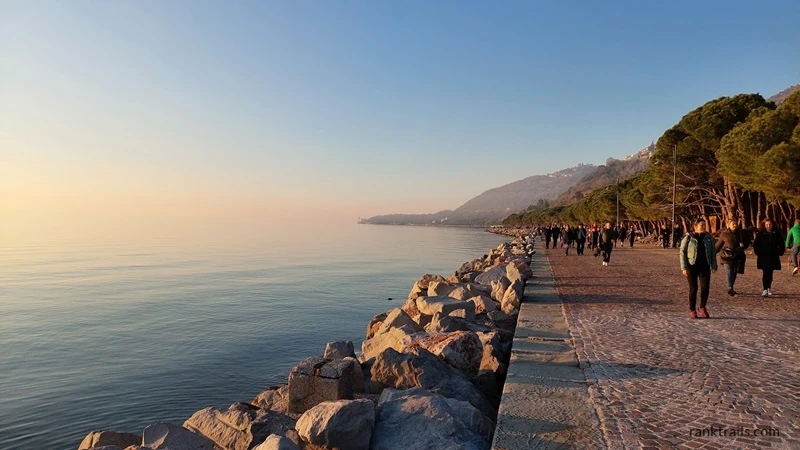
- Captions: Add a short caption below the photo when relevant. It gives AI and readers additional context and connects the image to its section. For example, to describe the image below, you can write “Evening walk along Trieste’s Barcola promenade, one of the city’s favorite seaside spots.”
If you haven’t read it yet, I’ve written a detailed guide on how to optimize image alt text for travel blogs, covering examples, tone, and SEO strategy. You can find it here: How to write image alt text for travel photos.
Tip: Keep your image details consistent
Use the same naming logic, tone, and entity references throughout your post.
- If you write “Strada Napoleonica trail” in the text, don’t shorten it to “Napoleonica” in your filename or alt text.
- When linking an image to another post, make sure the anchor text or caption mirrors the same entity name.
- Consistency across filenames, alt text, and captions strengthens your entity graph (the web of connections algorithms use to understand your topic.)
Images are one of the most effective ways to reinforce entities — the places, landmarks, and experiences that make your post unique. When each visual asset is properly labeled and consistent with the text, AI systems can connect it to the right location or attraction and use it as evidence of your expertise.
Done right, your photos illustrate your story and also verify it.
Using FAQs to boost AI visibility
Another simple way to strengthen both the structure and visibility of a travel blog post is using FAQs. They organize information in a question–answer format that’s easy for readers to scan and even easier for AI systems to interpret. When well-written, FAQs make your post feel complete while signaling to algorithms that your content directly addresses user intent.
The growing importance of FAQs isn’t theoretical — it’s backed by results. About a year ago, Steven Macdonald shared on LinkedIn how updating his blog posts with FAQ sections improved their search visibility. His findings quickly spread across the content and SEO community, prompting many creators to test the same approach. Furthermore, a 2025 Relixir study analyzing 50 websites found that pages using FAQPage schema saw a 78% increase in AI citations in Google’s AI Overviews following the Gemini 2.0 rollout.
For travel bloggers, FAQs serve two purposes:
- they answer real traveler questions, and
- help AI systems extract, verify, and reuse your content.
Each question you include gives you another chance to rank for conversational queries and reinforce key entities like Miramare Castle or Strada Napoleonica.
Ideally, your FAQ section should include 3 to 5 real, conversational questions that people genuinely ask about your destination. Begin with a short, direct answer (one or two sentences), followed by a short elaboration for clarity.
Here’s an example using Trieste:
Is the Strada Napoleonica safe for beginners? Yes, the Strada Napoleonica is one of the easiest trails around Trieste. The path is wide and mostly flat, though parts can be slippery after rain, so wearing proper shoes is recommended.
How long does it take to hike the Strada Napoleonica? Most people complete the trail in about two to three hours. It’s a scenic route with panoramic views of the Gulf of Trieste, and you can turn back at several points if you want a shorter walk.
What’s the best time of day to walk along Barcola promenade? Early morning or late afternoon are ideal. The light is softer for photography, and you’ll avoid the mid-day crowds that fill Barcola during summer weekends.
How do I reach Miramare Castle from Trieste city center? The easiest option is bus line 6, which runs directly from the city center to Miramare. If you prefer to walk, take the coastal route starting from Barcola — it’s about 45 minutes on foot from there, with cafés and viewpoints along the way.
Is there public transport to the start of the Napoleonica trail? Yes, bus line 4 or the Opicina tram (when in service) will take you close to the trailhead at the Obelisco viewpoint. From there, the entrance to the trail is clearly marked.
These short, structured FAQs not only answer common questions but also create clean, machine-readable data points for search engines and AI systems.
If your CMS allows it, you can wrap this section in FAQPage schema markup so it’s explicitly recognizable as structured content.
According to Google’s FAQPage structured data documentation, properly marked-up question–answer pairs can help your content appear directly in search results and improve how AI tools interpret your information.
Here’s a simple FAQPage schema snippet example (you can expand it to include all your questions):
<script type="application/ld+json">
{
  "@context": "https://schema.org",
  "@type": "FAQPage",
  "mainEntity": [
    {
      "@type": "Question",
      "name": "Is the Strada Napoleonica safe for beginners?",
      "acceptedAnswer": {
        "@type": "Answer",
        "text": "Yes, the Strada Napoleonica is one of the easiest trails around Trieste. The path is wide and mostly flat, though parts can be slippery after rain."
      }
    },
    {
      "@type": "Question",
      "name": "How long does it take to hike the Strada Napoleonica?",
      "acceptedAnswer": {
        "@type": "Answer",
        "text": "Most people complete the trail in about two to three hours. It’s a scenic route with panoramic views of the Gulf of Trieste, and you can shorten it by turning back earlier."
      }
    }
  ]
}
</script>
Even if you don’t add schema manually, formatting your FAQs in this clear question–answer style helps AI understand your content better, increases your chances of being featured in snippets, and makes your post more user-friendly overall.
Use this prompt to audit your travel post for AI friendliness
Before publishing, it’s worth checking how AI systems might interpret your content. A quick self-audit can help you spot unclear structure, missing entities, or sections that algorithms may struggle to summarize correctly.
To make that easier, I’ve created a ready-to-use AI content analysis prompt you can run in ChatGPT. It’s designed specifically for travel bloggers to test how well their posts perform across the three key layers of AI-first SEO: AEO (Answer Engine Optimization), AIO (AI Optimization), and GEO (Generative Engine Optimization).
I originally developed this prompt for my work, where I’ve been using it to evaluate different types of content — from highly technical engineering blog posts to industry trend articles. It’s been especially useful for testing how clearly structured or entity-rich a draft is before publication.
You can download it here: AI content audit prompt for travel bloggers (PDF).
This quick audit helps you:
- Identify what parts of your content AI might misinterpret.
- Check if your headings, structure, and entity use are clear.
- Get practical feedback before you publish.
You can also reuse the same prompt after publishing a post. It’s a fast way to ensure your content stays aligned with evolving AI crawlers and visibility standards.
Conclusion
This guide wasn’t about Trieste itself — it used the city to explain how structure makes travel content AI-friendly. Clear modules, question-based headings, consistent entities, and concise FAQs all help AI systems interpret and surface your posts more effectively.
Now it’s your turn. Apply the same approach to your own destination: break it into sections, organize details logically, and test your draft with the audit prompt. Structured travel content isn’t just easier to read; it’s built to stay visible as AI search evolves.
More questions about AI-friendly travel content
No, you don’t need coding knowledge. Most CMS platforms like WordPress let you add FAQPage, HowTo, or Place schema using plugins (e.g., Yoast, Rank Math, or Schema Pro). These plugins generate the code automatically once you fill in the question–answer fields.
Yes, and you should. Reusing consistent entity names (like “Miramare Castle” instead of “the castle near Trieste”) helps AI connect your articles semantically. It strengthens your internal linking and reinforces your topical authority around that destination.
Aim to review and refresh content every 6–12 months or whenever travel details change (like bus schedules or opening hours). AI systems value current, verifiable data, so even small updates can improve visibility in generative results.
FAQ schema works best for short, conversational traveler questions (“Is Barcola promenade good for swimming?”), while HowTo schema fits structured itineraries or step-by-step guides (“How to spend one day in Trieste”). Using both appropriately increases your chances of being cited in AI summaries.
You can test it using AI tools like ChatGPT and Gemini. Ask them to summarize your post or list key takeaways — if the answer reflects your structure and entities accurately, your content is AI-friendly. You can also run the “AI content audit prompt” shared in the guide for a more systematic check.